[TRADE_PLUGIN]BTCUSDT,BTCUSDT[/TRADE_PLUGIN]
#BTC
- Inflection Point at Key Support: Bitcoin's price is testing a critical technical support level near $64,300 (lower Bollinger Band). Holding or breaking this zone will dictate the short-to-medium term trend direction, with resistance awaiting near $69,400.
- Conflicted Sentiment Mirrors Price Action: Market news reflects a tug-of-war between short-term fears (geopolitics, inflation, miner distress) and long-term bullish narratives (institutional adoption, digital gold thesis). This conflict is causing the current consolidation.
- Long-Term Trajectory Tied to Adoption S-Curve: Price forecasts for 2030 and beyond are exponentially more dependent on Bitcoin's success in the broader financial and technological landscape than on any single cycle, with outcomes ranging from niche asset to primary reserve asset.
BTC Price Prediction
Technical Analysis: BTC at Critical Support Zone
According to BTCC financial analyst Mia, Bitcoin is currently trading at $66,877.60, which is below its 20-day moving average of $69,373.21. This suggests a short-term bearish momentum. The price is hovering near the lower Bollinger Band at $64,290.98, indicating a potential oversold condition or a test of strong support.
The MACD indicator shows a positive histogram of 1,121.78, with the MACD line (2,190.22) above the signal line (1,068.44). This divergence—where price is down but momentum remains positive—can sometimes precede a bullish reversal if support holds. The key resistance to watch is the middle Bollinger Band and the 20-day MA around $69,300-$69,400. A break above this could target the upper band near $74,455.
Mia notes that the current technical setup presents a classic inflection point. Holding above the $64,290 support is crucial for bulls to maintain the longer-term uptrend structure.

Market Sentiment: A Battle Between Fear and Long-Term Faith
BTCC financial analyst Mia assesses that current news headlines reflect a conflicted market sentiment, which aligns with the technical picture of indecision at a key support level.
On the bearish side, narratives around Bitcoin's 'safe haven' status faltering, links to inflation fears, oil price spikes, and miner capitulation (evidenced by Marathon Digital's layoffs and sell-offs) are creating headwinds and fear. This explains the pressure pushing the price toward its lower technical bounds.
Conversely, Mia points to bullish counter-narratives. Headlines discussing strong support levels, potential for a 10% surge, Bitcoin's role as a geopolitical hedge, and the market approaching a 'real bottom' indicate underlying optimism and buyer interest at these lower prices. The restructuring of firms like MARA towards AI and Energy, while involving Bitcoin sales, also signals a maturation of the industry beyond pure mining.
The overarching sentiment, according to Mia, is one of cautious consolidation. The market is weighing short-term macroeconomic fears against long-term structural bullish themes, resulting in the current stalemate near $70K.
Factors Influencing BTC’s Price
Bitcoin's Safe Haven Narrative Falters Amid Geopolitical Turmoil and Oil Price Surge
Bitcoin's reputation as a hedge against geopolitical risk is unraveling as it mirrors the behavior of liquidity-sensitive assets. The escalating conflict between the United States and Iran has sent shockwaves through oil markets, strengthening the dollar and tightening financial conditions—factors now weighing heavily on cryptocurrencies.
The market faces a potential retest of $10,000 support if oil breaches $150/barrel, a scenario few anticipated weeks ago. This marks a fundamental shift: rather than attracting defensive flows during times of crisis, Bitcoin is now reacting to macro pressures like energy inflation and dollar strength.
Iran's threats against US corporate interests in the Middle East introduce additional risks to crypto infrastructure and balance sheets. The repricing accelerated as oil's surge became the catalyst for broader financial contagion.
Bitcoin (BTC) Flashes Strong Support: Can Bulls Trigger a 10% Surge Above $72K?
Bitcoin shows signs of stability near critical support at $65,000, with potential for an upward move if bulls reclaim $68,000. The cryptocurrency currently trades at $66,680, down 0.33% over 24 hours, while maintaining its dominance as the market's primary trendsetter.
Technical analysis reveals a consolidation phase below both 50-day and 200-day moving averages, signaling bearish momentum. However, weakening selling pressure near $65,000 suggests possible exhaustion. A breach of $68,000 could pave the way toward $72,000 resistance, while failure to hold support may trigger a drop to $60,000.
Liquidation maps highlight key price levels that could determine Bitcoin's next major move. The asset's correlation with broader crypto markets remains strong, though BTC continues to dictate overall sector direction.
Bitcoin Stalls Near $70K as Bearish Signals Persist
Bitcoin's rally falters at a critical resistance zone between $69,000 and $70,000, with technical indicators suggesting sustained selling pressure. The cryptocurrency traded at $66,896, up 0.33% in 24 hours but remains below key moving averages—a bearish signal for momentum traders.
Analysts highlight the $70K level as a make-or-break threshold. 'This range is where short positions cluster,' noted crypto analyst Ted. 'A retest could trigger another wave of selling.' The asset's failure to hold gains after last month's $76K all-time high reinforces concerns of a downtrend.
Market structure shows higher highs and lower lows—a classic sign of weakening demand. The 20-day SMA ($69,345) and 50-day SMA ($68,675) now act as ceilings rather than supports. Traders await either a decisive breakout or confirmation of further downside.
MARA Holdings Restructures with Layoffs and Bitcoin Sell-Off to Pivot Toward AI and Energy
MARA Holdings is undergoing a significant restructuring, cutting approximately 15% of its workforce while selling off 15,000 BTC to raise $1.1 billion. The move aims to reduce debt and reposition the company toward artificial intelligence, energy, and high-performance computing.
The decision reflects a broader shift in the crypto mining sector, where Bitcoin reserves are increasingly leveraged as financial instruments rather than long-term holdings. MARA's pivot underscores the evolving role of miners in the digital asset ecosystem.
Market observers note the strategic timing of the sell-off amid a tense crypto climate. The layoffs span multiple departments, though the company has yet to disclose official figures.
SpaceX IPO Poised to Eclipse Tesla Market Cap While Reshaping Bitcoin's Equity Market Role
Elon Musk's SpaceX has confidentially filed for what could become the largest IPO in US history, targeting a $75 billion raise at a staggering $2 trillion valuation. This aerospace juggernaut's public debut would instantly place it among the world's top 10 most valuable companies—surpassing Tesla's market cap by nearly threefold.
The listing challenges conventional Bitcoin investment theses. Unlike proxy plays through crypto-native firms, SpaceX introduces digital asset exposure via industrial infrastructure at unprecedented scale. Market observers note this could fundamentally alter how institutional capital accesses cryptocurrency exposure.
With a projected June listing, the offering dwarfs previous records. The $2 trillion valuation would exceed Saudi Aramco's 2019 debut, rewriting IPO playbooks while creating new corridors between aerospace and digital asset markets.
Bitcoin: Is the Market Finally Approaching a Real Bottom?
Bitcoin's current market phase mirrors early bear market conditions, with on-chain indicators suggesting proximity to cycle lows. The supply in profit has dropped to 11.2 million BTC, nearing the 9 million BTC level seen at the previous bear market bottom. Meanwhile, 8.2 million BTC are now held at a loss—a configuration last observed in late 2022.
Analysts highlight this as a potential undervaluation zone. CryptoQuant data reveals a structural shift reminiscent of historical bear markets. At the 2022 cycle trough, losses outpaced gains with 10.6 million BTC underwater. The market now teeters between capitulation and mid-cycle correction.
Bitcoin Decline Linked To Inflation Fears And Oil Spike
Bitcoin plunged to a weekly low below $66,000 as macroeconomic instability rattled crypto markets. The selloff mirrors traditional market turbulence, with Brent crude spiking to $114 amid Middle East tensions and the Nasdaq dropping 2% as investors fled risk assets.
Over $400 million in crypto liquidations accelerated the downturn, exposing digital assets' continued correlation with broader financial markets. Some analysts now speculate about extreme downside scenarios, including a potential retest of $10,000 levels last seen during crypto winter.
The market reaction underscores how geopolitical shocks and inflationary pressures remain key drivers of crypto volatility. As capital rotates out of speculative assets, Bitcoin's role as a risk-on indicator grows increasingly apparent.
The Hidden Commodity Market Fueling Bitcoin Mining
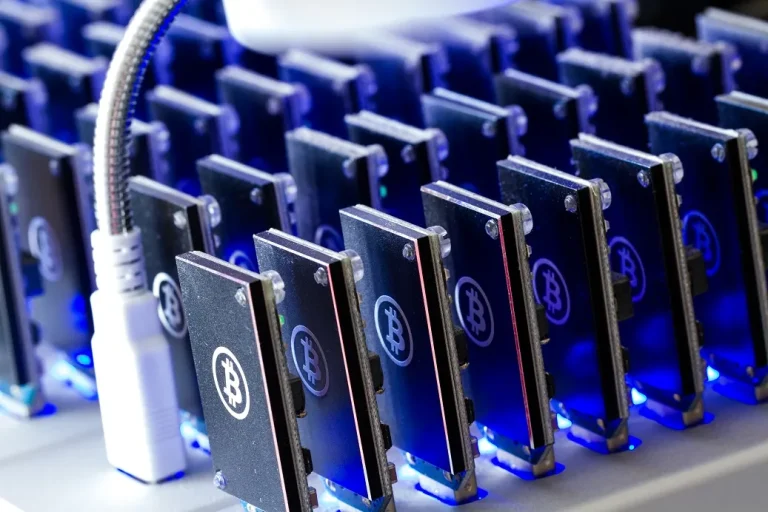
Behind Bitcoin's mining ecosystem lies a sophisticated commodity market trading computing power. Since 2014, platforms like NiceHash have matched buyers and sellers of hashpower across 190 countries, creating a real-time pricing mechanism for raw computational resources. The market operates similarly to traditional exchanges, with SHA-256 algorithm demand driving Bitcoin-related activity.
Miners connect hardware—GPUs, CPUs, or ASICs—to supply the marketplace, while buyers bid for specific algorithms through competitive or fixed-price orders. Transactions settle automatically, with prices updating every 10 seconds. This opaque but critical market reveals how mining power transforms into a liquid asset class, detached from physical infrastructure.
Bitcoin Emerges as Geopolitical Hedge Amid Traditional Market Closures
Bitcoin traded as the only open global liquidity pool during Easter weekend, with $33 billion in volume clearing as traditional markets shuttered. The cryptocurrency held near $67,150 after ranging between $65,780-$67,373, demonstrating its evolving role as a real-time geopolitical risk barometer.
Oil shocks dominated the macro landscape. WTI crude surged 11.4% to $111.54 and Brent rose 7.8% to $109.03 following Middle East tensions. Iran's attack on Israel and refinery fires in Kuwait's Mina al-Ahmadi compounded pressure on energy markets.
The Strait of Hormuz remains the flashpoint transmitting risk premiums across asset classes. Bitcoin's 24/7 trading infrastructure captured these dynamics while Wall Street observed Good Friday closures.
Marathon Digital Cuts 15% of Workforce Amid Strategic Pivot from Pure Bitcoin Mining
Marathon Digital Holdings (MARA), one of the largest publicly traded Bitcoin miners, has initiated layoffs affecting 15% of its workforce. The restructuring spans multiple departments and includes contractor positions, with the process unfolding over several days.
The move coincides with MARA's sale of 15,100 BTC—a strategic capital management decision following its recent $1 billion convertible notes repayment. CEO Fred Thiel framed the cuts as part of a broader evolution toward energy infrastructure and high-performance computing, signaling a departure from pure-play Bitcoin mining.
Affected employees will receive one-month paid leave through April 30, 13 weeks of severance, and full payout of accrued PTO. The company confirmed partnerships with Starwood and Exaion to repurpose mining hardware for AI and HPC applications—a hedge against crypto market volatility.
Bitcoin Correction Deepens as Long-Term Holders Capitulate
Bitcoin's plunge to $66,928—a 47% drop from its October 2025 peak—has exposed $600 billion in unrealized losses. Over 44% of circulating supply now sits underwater, triggering rare capitulation among long-term holders.
The market shows textbook stress signals: redistribution dynamics are accelerating as weak hands transfer assets to new buyers. This mirrors historic turning points where prolonged sell-offs preceded major trend reversals.
Current volatility suggests either a healthy correction or the early stages of a deeper cycle shift. The $66,000 level now serves as a litmus test for institutional conviction.
BTC Price Predictions: 2026, 2030, 2035, 2040 Forecasts
Based on the current technical posture and market sentiment analyzed by BTCC financial analyst Mia, any price forecast must account for the high volatility and evolving adoption cycles of Bitcoin. The following table provides a framework based on different adoption and macroeconomic scenarios, using the current consolidation around $67K as a baseline.
| Year | Conservative Forecast | Base Case Forecast | Bullish Forecast | Key Catalysts & Risks |
|---|
| 2026 | $55,000 - $75,000 | $80,000 - $120,000 | $130,000 - $180,000 | Catalysts: ETF inflows resurgence, regulatory clarity. Risks: Prolonged high rates, miner stress. |
| 2030 | $100,000 - $150,000 | $200,000 - $350,000 | $500,000 - $750,000 | Catalysts: Widespread institutional custody, halving cycle effects. Risks: Technological disruption, stringent global regulations. |
| 2035 | $200,000 - $300,000 | $400,000 - $800,000 | $1,000,000 - $1,500,000 | Catalysts: Bitcoin as a core treasury reserve asset, full integration in DeFi. Risks: Quantum computing threats, superior digital asset emergence. |
| 2040 | $300,000 - $500,000 | $750,000 - $1,500,000 | $2,000,000+ | Catalysts: Global digital store of value status, scarcity premium peak. Risks: Market saturation, shift in generational wealth preferences. |
Mia emphasizes that these ranges are not definitive targets but plausible pathways. The 2026 forecast is most sensitive to the current cycle's resolution. A failure to hold the $64K support could validate the conservative range, while a breakout above $74K could accelerate momentum toward the base case. The long-term forecasts (2030-2040) hinge on Bitcoin successfully transitioning from a speculative asset to a legitimized global monetary good, a process that will face significant technological and regulatory tests.




Log in to Reply
Log in to comment your thoughtsComments